
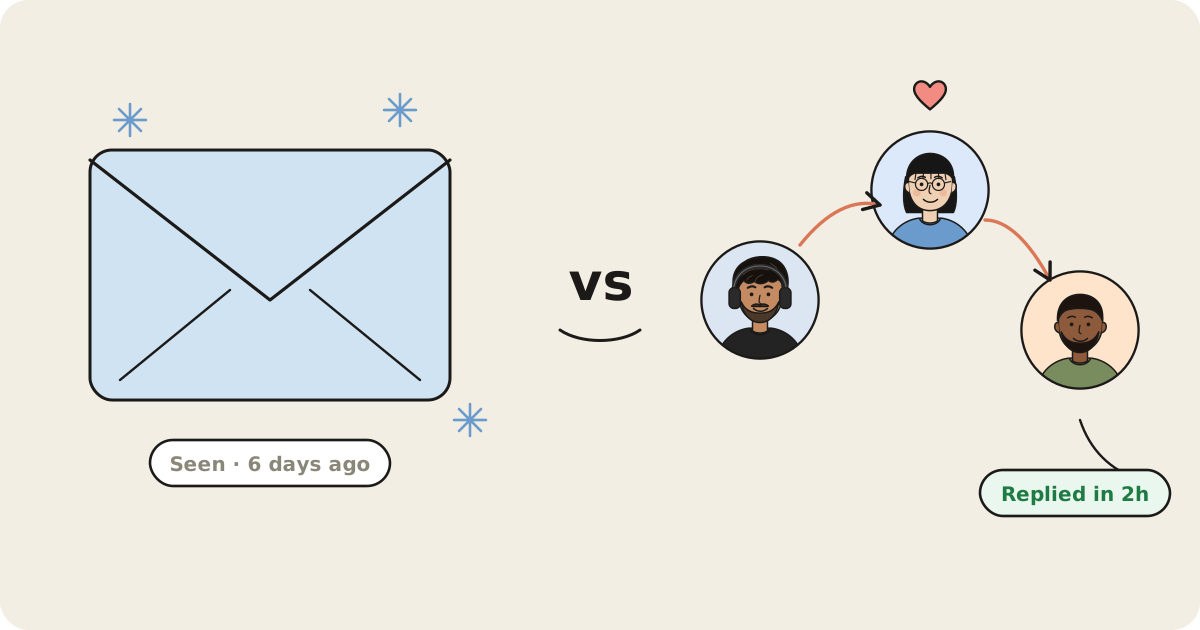
Why warm intros outperform cold outreach
Cold outreach asks a stranger to trust you on the spot. A warm intro replaces that leap of faith with a reference: "my friend said you're worth talking to." That's a completely different starting point, and buyers say so. In RAIN Group’s survey of 488 B2B buyers, 61% said a pre-existing relationship makes them more likely to connect with a seller, and 57% said the same about a referral from someone inside their company.
Cold outreach, by comparison, starts low. Woodpecker’s benchmark of 56,614 campaigns found a median reply rate of 1.5%, and Instantly’s 2026 benchmark put the average at 3.43%. LinkedIn’s own data points the same way: recruiters’ InMails that mention a shared former employer are 27% more likely to get a response.
The problem isn't that warm intros work better. Everyone knows that. The problem is that finding one usually means scrolling through hundreds of connections trying to remember who might know whom — which is exactly the kind of task most people give up on and default to cold outreach instead.
How to tell if you have a warm path
Before you write a cold message, run through three checks:
- Direct connection. Are you already 1st-degree connected to the person or company you're targeting?
- Mutual connection. Is there a 2nd-degree path through someone you trust and who trusts you back?
- Shared context. Did you overlap at a company, school, or group with someone close to the target?
Doing this manually for every single outreach target doesn't scale past a handful of people. That's the actual reason cold outreach volume stays so high — not because it works better, but because checking for a warm path is slow.
What a warm intro request should look like
Once you've found the path, the ask matters. Keep it specific and low-effort for the connector:
- Name exactly who you want to be introduced to.
- Give one sentence of context on why, so they can forward it easily.
- Offer a short paragraph they can literally copy-paste as the intro message.
The easier you make it for your connection to say yes, the more likely they follow through.
Automating the search for warm paths
This is the exact gap People by Sniff closes: instead of manually checking your network for a path to every prospect, you ask in plain English — "who can introduce me to someone at Stripe?" — and get back a ranked list of the strongest paths, with the reason each one made the list.
Sources
- RAIN Group, Top Performance in Sales Prospecting (survey of 488 B2B buyers, 2017)
- Cold email reply rates: Woodpecker cold email benchmarks and Instantly Cold Email Benchmark Report 2026
- LinkedIn Talent Blog, Tips for writing InMails from LinkedIn recruiters (2023)