
Stop scrolling, start querying
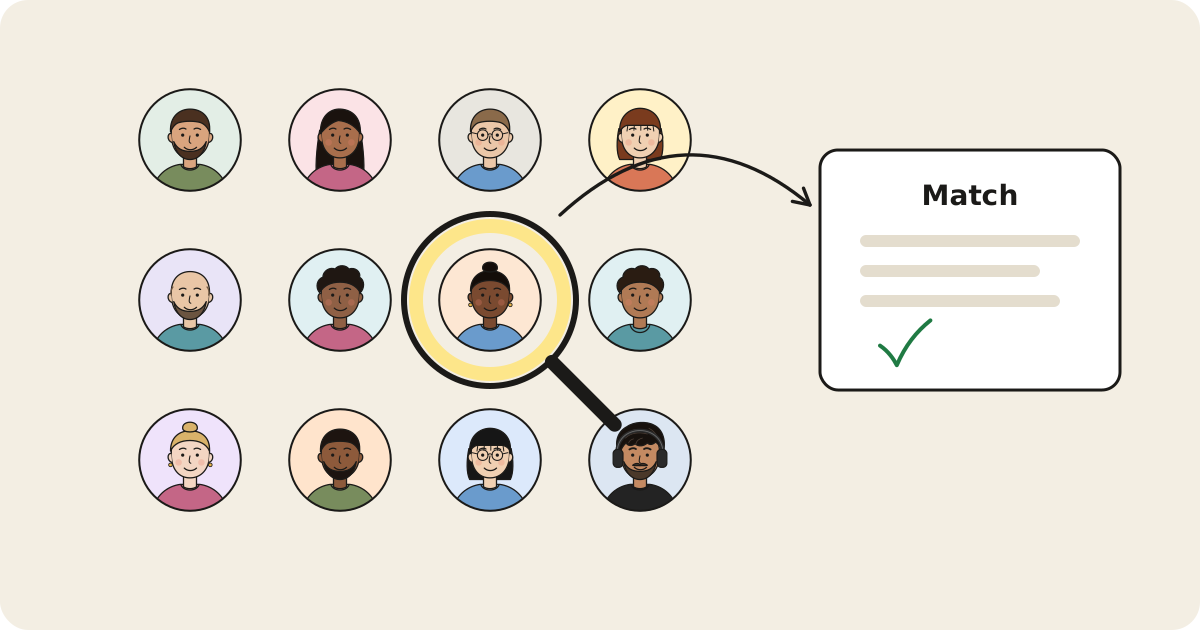
The instinct when you need a referral is to open your connections list and scroll. This works for the ten people you talk to regularly and fails completely for the other 1,200 you've forgotten about. Recruiters who source well don't rely on memory — they treat their network like a searchable database and query it with specific criteria.
The criteria that actually matter
- Role and seniority. "Senior engineers" is too broad. "Senior backend engineers with 5+ years who've worked at a Series B or later" is a query you can act on.
- Company overlap. Connections who've worked at your target companies, or companies with a similar tech stack or size, tend to know relevant people even if they aren't a fit themselves.
- Openness signals. Recent job-change activity, "open to work" signals, or posts about being on the market are worth weighting heavily — timing matters as much as fit.
- Referral likelihood. A strong candidate match is only useful if the connection is also someone likely to respond and vouch. Factor in relationship strength, not just title match.
A simple sourcing workflow
- Write your query as a full sentence, the way you'd ask a colleague: "Who in my network has senior engineering experience and might know someone open to a new role?"
- Get back a ranked list instead of a raw keyword match.
- Start outreach at the top, where relationship strength is highest, not just title match.
- Ask directly for either interest or a referral — both are useful outcomes.
The advantage recruiters have isn't a bigger network — it's a faster way to query the one they already have. People by Sniff brings that same plain-English query workflow to anyone's LinkedIn network, not just professional recruiters.
Why this beats posting a job and waiting
A referral sourced from an existing connection starts with a trust advantage a cold applicant doesn't have. In a New York Fed study of one U.S. company, referred candidates were 6% of applicants but 29% of hires. Older Jobvite data also found referred hires took 29 days on average, against 39 from job boards. Treating your own network as the first sourcing channel, before external job boards, tends to shorten the search.
Sources
- Brown, Setren & Topa, Do Informal Referrals Lead to Better Matches? (Federal Reserve Bank of New York Staff Report 568)
- Jobvite data, as reported by Personnel Today (2015)