
Why raw connection count is a bad signal
Having 3,000 LinkedIn connections tells you almost nothing useful. Most of them are people you met once at a conference, added during a job hunt years ago, or accepted a request from without ever exchanging a message. Even among online friends, few are close: in a 2016 study by Robin Dunbar, people rated only about 28% of their Facebook friends as genuine friends. Treating every connection as equally valuable is why manually scrolling your network feels so unproductive — the signal is buried under noise.
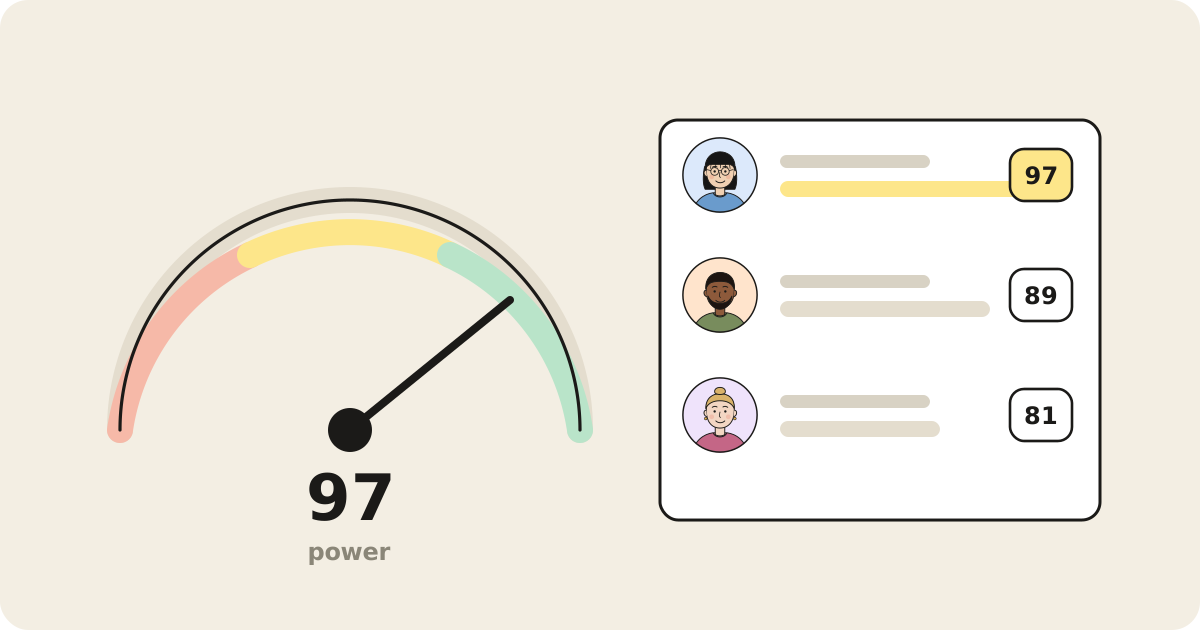
A power score exists to cut through that noise by weighting connections on factors that actually predict whether they'll respond and help.
What goes into a power score
- Relationship strength. How connected are you, really — direct messages exchanged, shared groups, overlapping tenure at a company, mutual connections in common.
- Recency of activity. Someone who posted last week is more reachable than someone whose last LinkedIn activity was three years ago.
- Relevance to your query. A power score isn't static — it shifts based on what you're asking. The same connection can score high for "who works in fintech" and low for "who can refer me to a design role."
- Reachability. Some people respond to everyone; others rarely open LinkedIn. How active someone is on the platform is a reasonable signal of whether they’ll see your message.
Strongest doesn’t always mean most useful, though. A large LinkedIn experiment published in Science found that for job moves, moderately weak ties beat both the strongest and the weakest. That’s why relevance to the specific question matters as much as closeness.
How to use a power score in practice
Don't treat the top result as the only option — treat the ranking as a prioritized to-do list. Start outreach at the top of the list, where relationship strength and relevance are both highest, and work down only as needed. This is a much better use of limited outreach time than messaging everyone who technically matches a keyword search.
It's also useful defensively: before your sales or recruiting team goes cold on an account, checking the power score of your existing connections there can save an entire outbound sequence.
Power score vs. LinkedIn's own "relationship" signals
LinkedIn shows basic signals like "you both know X people" but doesn't rank or combine them into anything actionable. A power score turns scattered signals into one ranked answer to the question "who should I actually talk to first?" — which is what People by Sniff calculates every time you run a search.
Sources
- Dunbar, Do online social media cut through the constraints that limit the size of offline social networks? (Royal Society Open Science, 2016)
- Rajkumar et al., A causal test of the strength of weak ties (Science, 2022)